THE QUESTION NO KING WOULD ASK
David is at the height of his power. He has crushed his enemies, united the kingdom, and secured Jerusalem. Every ancient instinct says: now you mop up. You eliminate the remaining heirs of the rival house. Consolidate your power.
Instead, David asks this: “Is there still anyone left of the house of Saul, that I may show him kindness?”
That is not a kingly question. It is a covenant question. Fifteen or so years earlier, David had made a covenant promise to his closest friend, Jonathan, Saul’s own son and heir: “Do not cut off your steadfast love from my house forever…” (1 Sam 20:15, see also 1 Sam 18:3-4).
Jonathan was dead now. No one would have expected David to keep the promise. No one would have blamed David for ignoring it.
But David was focused on what hesed demanded. Hesed is difficult to translate with a single Englinsh word. It means the steadfast covenant love that will never let go. The King was hunting for a rival heir to the throne, an enemy. Not to destroy him. To honor him.
LO-DEBAR: THE NOWHERE PLACE
The search turned up one survivor: Mephibosheth, son of Jonathan, grandson of Saul. His very name is related to the word for shame. Crippled in both feet (2 Sam 4:4). Living in Lo-debar, a name that means “no pasture.” A hidden and forgotten place.
When news of Saul’s and Jonathan’s deaths reached them, Mephibosheth was five years old. His nurse grabbed him and ran. There was a terrible fall. He never fully recovered. He had been hiding in that nowhere place ever since.
When Mephibosheth is brought before David, he falls on his face, expecting to be executed. He calls himself a dead dog. That is an honest self-assessment of his situation. A rival heir. A political threat. A broken man.
David could erase him in a moment.
But David calls Mephibosheth by name. He sees him. And when he sees him he sees Jonathan.The brokenness was not an obstacle to the grace. It was the occasion for it.
THREE GIFTS. NONE EARNED.
None earned. All given (2 Sam 9:7).
First—protection:
“Do not fear.”
Grace begins and fear dies.
Second—provision:
“I will restore to you all the land of Saul.”
Everything lost is returned.
Third—position:
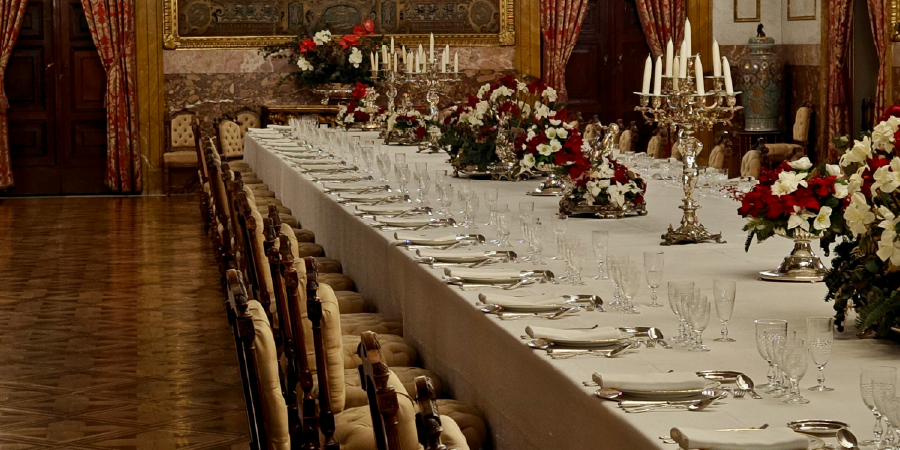
“You shall eat at my table always.”
Not a visit. A seat. Not charity. Adoption.
Always. Permanent. Never revoked. And why?
David tells us three times:
“For the sake of your father Jonathan.” (2 Sam. 9:1, 3, 7)
Not for Mephibosheth’s sake.
For the covenant’s sake.”So Mephibosheth ate at David’s table, like one of the king’s sons.” (2 Sam 9:11). That is hesed!
THIS IS OUR STORY
The chapter ends with a detail we are meant to feel: “Now he was lame in both his feet.” (2 Sam 9:13). Nothing changed physically. Everything changed positionally.
Still lame but now sought, chosen, restored, adopted.
Family.
And David is not the end of this story. He is a shadow.
There is a greater King. Jesus Christ the Son of David, the forever King, the King of Kings, the One who fulfilled every covenant promise. He does not merely honor enemies.
He dies for them.
And Mephibosheth? He’s us. Mephibosheth received what he did not earn because of a covenant he did not make. That is our story in Christ.
We were in Lo-debar. No pasture. No place. No hope. We were estranged from God, crippled by sin, waiting not for honor but for judgment.
And the King came for us.
Not with a sword, but with mercy. Not to destroy, but to adopt.
He called us by name. He brought us to His table.
Not because of us, but for His sake.
That is hesed.
And now?
We go find the next Mephibosheth.
Still broken, but seated at the table—forever.