
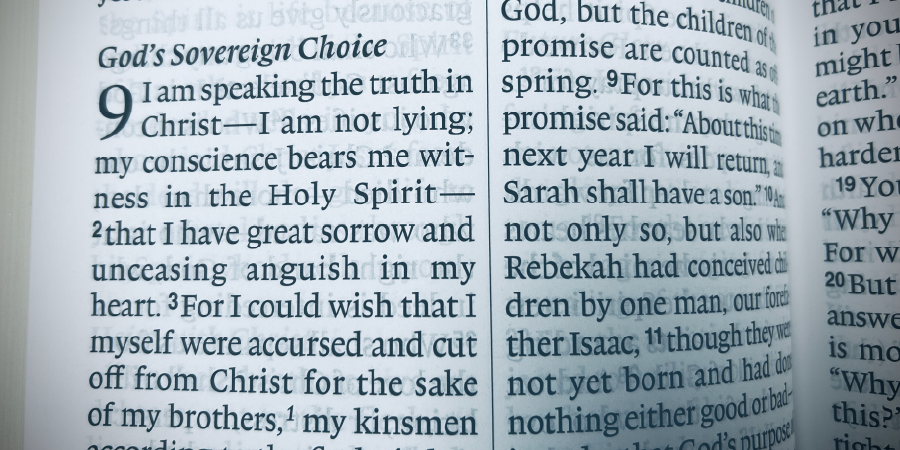
Romans 9 is often introduced with warning labels.
Brace yourself.
It’s heavy.
It’s controversial.
It’s impossible.
Many preachers dread it. They’d rather skip to something “practical.”
But that framing misconstrues the chapter entirely.
Romans 9 isn’t a cold doctrinal debate for theologians. It’s a tear-stained, heart-wrenching pastoral letter—written in anguish, aimed straight at struggling believers. Believers who have trouble understanding why things are happening the way they are. Understood rightly, it’s one of the most practical and hope-filled chapters in Scripture.
Why? Because Romans 9 declares one explosive truth: God’s word has not failed. Therefore, your hope never will.
Born from Pain, Not Theory
Paul doesn’t launch into abstract speculation. He starts with sorrow.
“I have great sorrow and unceasing anguish in my heart” (Romans 9:2).
His grief is for his fellow Jews who reject the Messiah. This teaching isn’t detached theology. It’s a pastor weighed down by real heartbreak—unanswered prayers, broken families, dashed expectations.
Romans 9–11 isn’t a side excursion. It’s Paul’s passionate defense of God’s faithfulness amid Israel’s unbelief. The burning question isn’t “How does election work?” It’s “Has God’s word failed?”
Paul’s answer rings out: “It is not as though the word of God has failed” (Romans 9:6).
Everything that follows proves it. This theology is intensely practical hope.
Trust God, Not Your Expectations
Ever prayed hard, only to see the opposite happen? Loved someone who walked away from faith? Followed Christ long enough to feel deep disappointment?
Romans 9 is for you.
It shows that shocking outcomes don’t signal God’s failure. They often ultimately reveal His freedom, mercy, and faithfulness. God has always worked by promise, not human logic. He chose Isaac over Ishmael, Jacob over Esau. Mercy trumps merit. Grace overrides bloodlines. God defies our ideas of “fair” and “predictable.”
That truth doesn’t crush hope—it anchors it.
Your Assurance Rests in God, Not You
Salvation doesn’t hang on your willpower, performance, or consistency.
“So then it depends not on human will or exertion, but on God, who has mercy” (Romans 9:16).
That’s not discouraging. It’s liberating.
If your rescue depended on the steadiness of your faith, understanding, or obedience, you’d never rest. But Romans 9 demolishes self-reliance and plants hope firmly in God’s sovereign mercy. Your security isn’t in how tightly you grip God—it’s in how tightly He grips you through Christ. He will never let go.
Fairness Isn’t Good News—Mercy Is
People often recoil: “If God chooses some and not others, isn’t He unfair?”
Paul anticipates it: “Is there injustice on God’s part? By no means!” (Romans 9:14).
Here’s the gut-punch reality: Strict fairness means judgment for all. We’re all guilty and without excuse before God (Romans 2-3). Fairness offers no salvation, only judgment.
The gospel announces something better: All deserve wrath, yet God freely shows mercy to sinners. Romans 9 doesn’t portray a harsh God. It reveals astonishing patience and kindness. God is just—and inexplicably merciful.
This truth humbles us in prosperity and sustains us in pain.
Suffering Makes Sense in God’s Story
Paul doesn’t minimize hardship or offer cheap answers. He places it inside God’s redemptive plan. Even Israel’s unbelief serves God’s purpose. God endures “vessels of wrath” with patience (Romans 9:22)—not cruelty, but restraint—to display greater mercy on “vessels of mercy” prepared beforehand for glory (Romans 9:23).
His delay isn’t indifference. It’s deliberate, building toward greater mercy and an explosive revelation of glory.
For believers facing unanswered questions, Romans 9 offers something stronger than explanations: trust. All things—even rebellion—ultimately fold into God’s unstoppable purpose. “And we know that for those who love God all things work together for good, for those who are called according to his purpose” (Romans 8:28).
Don’t Put God on Trial
Romans 9 delivers the rebuke we need:
“Who are you, O man, to answer back to God?” (Romans 9:20).
This rebuke isn’t a gag order on honest lament. Scripture welcomes raw cries to God. God longs for us to cry out to Him with our pain and to ask, Why, Lord? But it forbids accusing Him as if we can judge the Judge.
God is the Potter; we are clay (Romans 9:21–23). He owes no explanations on our terms. In a world obsessed with judging everything—including God—by personal preference and self-referential expectations, Romans 9 calls us away from accusation and to adoration.
It All Points to Christ
Romans 9 isn’t fuel for endless debates. It’s rocket fuel for hope, worship, and glory to Christ. The sovereign God who judicially hardens and actively shows mercy is the same God whose Son died for undeserving sinners, Jew and Gentile alike.
The Judge became the judged on our behalf. The Potter bears nail-scarred hands. That changes everything.
Why Romans 9 Is So Encouraging
To weary believers surrounded by unmet expectations and chaos they know is beyond their control, Romans 9 delivers the truth you need most:
- God is never surprised.
- His promises never fail.
- His purposes always come to pass.
- Your salvation is secure—because it rests in Him, not you.
Stop fearing this chapter. Love it. Cling to it.
When life unfolds in ways you never expected, trust the unshakable sovereign God whose word will never fail (Romans 9:6).
That’s not an abstract theological category. That’s rock-solid hope—for today, tomorrow, and forever.





Leave a Reply